Used to
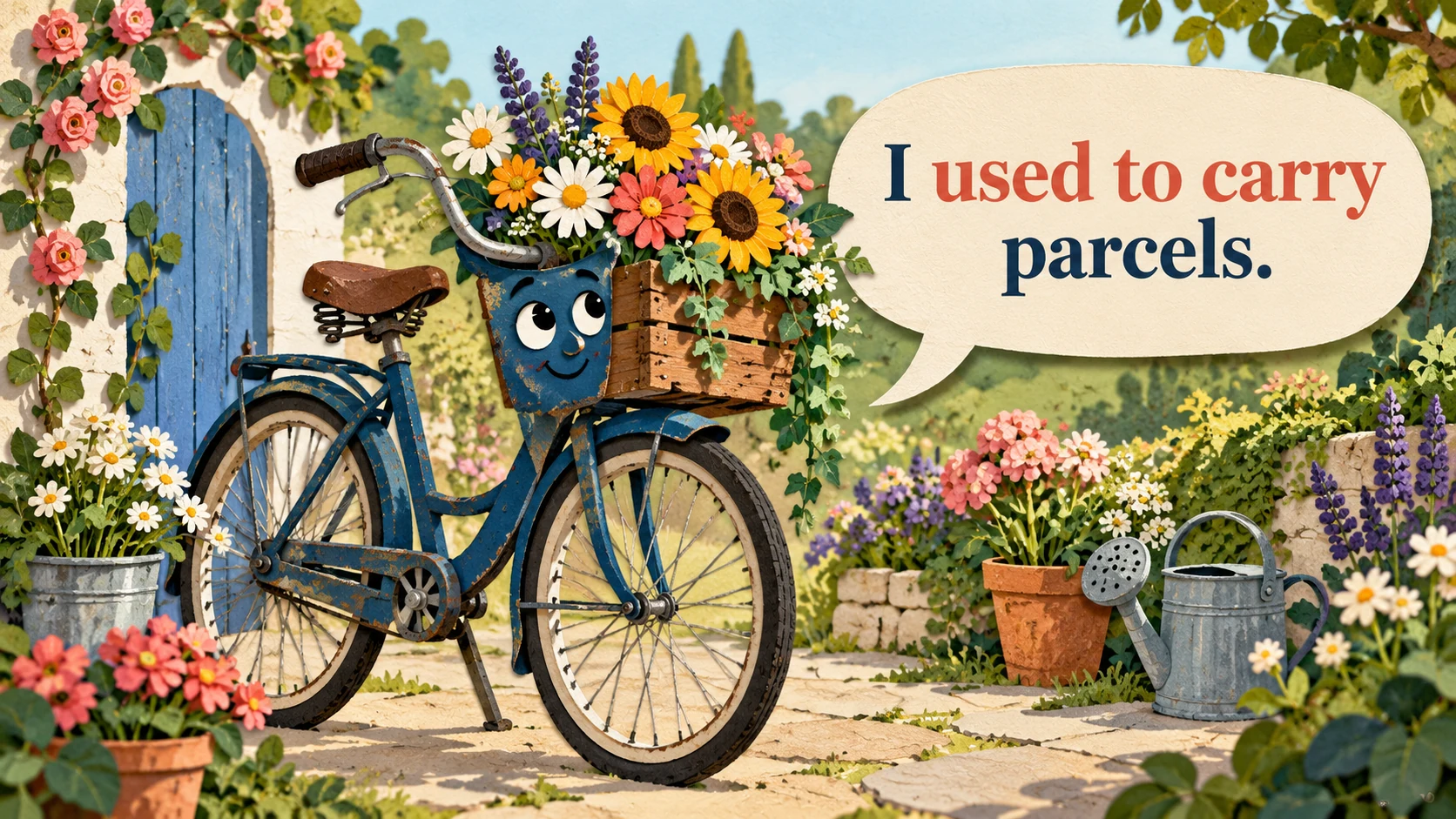
“I used to cycle to school.” This tells us about a regular past situation and suggests that it is different now.
Past habit or past state
Use used to + base verb for something that was true or happened regularly in the past but is no longer true, or may no longer happen.
- We used to play outside after school. (past habit)
- There used to be a cinema here. (past state)
- I used to have long hair. (past state)
The structure does not tell us the exact dates. Add a time phrase if the listener needs one: When I was ten, I used to live near the sea.
Questions and negatives
After did or didn’t, use use to without the final -d:
- Did you use to live here?
- I didn’t use to like coffee.
In everyday speech, never used to is also possible: She never used to eat spicy food.
Compare then and now
Used to is useful when you describe a change in your life:
| Earlier situation | Situation now | Sentence about the past |
|---|---|---|
| I lived with my parents. | I have my own flat. | I used to live with my parents. |
| I walked to school regularly. | I travel to work by bus. | I used to walk to school. |
| I disliked vegetables. | I enjoy them now. | I didn't use to like vegetables. |
The contrast can be stated or understood. This shop used to sell records suggests its earlier business has changed, even if you do not explain what it sells now.
Do not use used to for a single completed event: I used to lose my keys yesterday should be I lost my keys yesterday. A repeated habit is different: I used to lose my keys all the time.
The form does not change with the subject
I used to, she used to and they used to all use the same construction. The following verb is a base form: used to go, not used to went.
With questions and negatives, did carries the past meaning, so write use: Did she use to work here? She didn't use to work here. A short answer is Yes, she did or No, she didn't. Never used to has no did, so it keeps used: He never used to complain.
Compare with the past simple
- I used to walk to school. This highlights an old routine that has changed.
- I walked to school yesterday. This reports one finished event.
You can also use the past simple for a repeated past activity when the context gives the repetition: We walked to school every day in 2018. Used to adds a clearer contrast with the present.
Do not confuse used to do with be used to doing, which means “be accustomed to”: I’m used to getting up early.
Keep three similar expressions separate
| Expression | Meaning | Example |
|---|---|---|
| used to + base verb | An old habit or state | I used to get up at six. |
| be used to + noun/-ing | Something feels familiar | I'm used to getting up at six. |
| get used to + noun/-ing | Become familiar with something | I'm getting used to getting up at six. |
In the second and third expressions, to is a preposition. That is why an activity takes -ing. You can also use a noun: I'm used to the noise.
Being used to something does not mean you like it. I'm used to the early bus means it is familiar; you may still prefer to sleep longer.
Imagine starting a new job:
I used to start work at ten. Now I start at seven. At first, getting up early was difficult, but I'm getting used to it.
The first sentence describes the old schedule. The last describes the process of adapting to the new one.
For present routines, simply use the present simple: I usually walk to work. There is no present version I use to walk to work with the old-habit meaning.
You may also meet would for repeated past actions in stories: Every summer, we'd visit our grandparents. Used to is the more flexible starting point because it works with states too: We used to live near them. Do not replace that with would live when you mean a past residence, without another context.
When you write about a change, make the contrast concrete: I used to watch videos without subtitles, but now I use English subtitles to learn new words. That makes the function of the structure easy to see.
Sources and further reading
Try this structure in a short practice set with instant feedback.
Start practice